Doing to Learn
EVERY STUDENT RUNS SOMETHING REAL.
A project, a job, or a business of their own — and the results are on them.
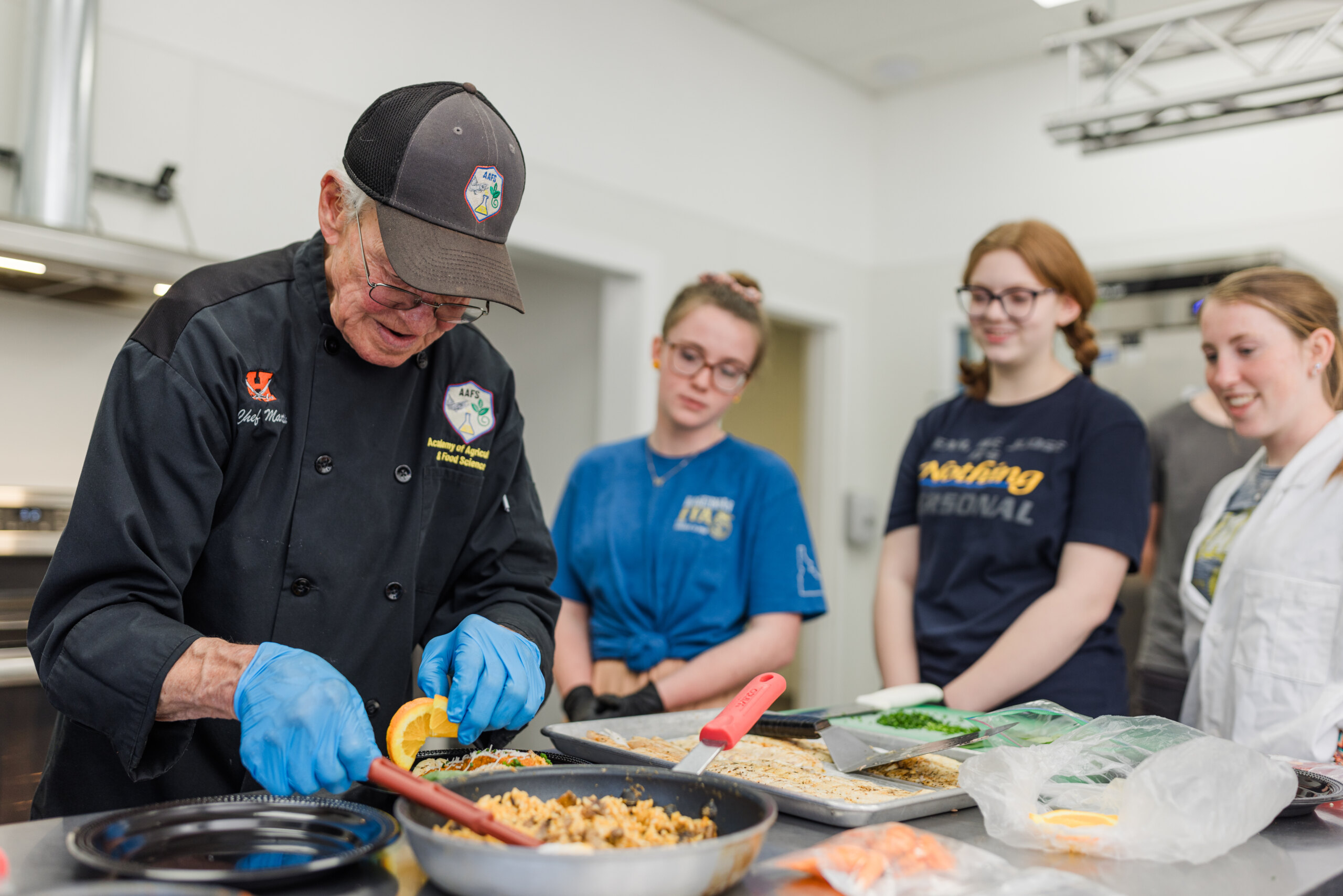
It’s called a Supervised Agricultural Experience — SAE for short — and it’s where the lessons leave the classroom. A student picks something real, tied to agriculture, and runs it over time: raising animals, growing a crop, interning at a clinic, launching a small business. Their teacher guides. The work is theirs.
What an SAE looks like
ONE PROJECT, MANY SHAPES.
There’s no single right one — only the one that fits the student.
Entrepreneurship
Start and run a business of your own.
Placement & internship
Work a real job in the industry, paid or volunteer.
Research
Investigate a real question, hands on the data.
Service-learning
Lead a project that serves your community.
Exploratory
Try careers on before you commit to one.
Whatever shape it takes, the student keeps the records, tracks the money and the hours, and answers for the results. That’s the “supervised” part — and it’s where a school project starts to feel like the real thing.
What it builds
There’s a difference between a student who studied something and a student who ran something — and employers and colleges can see it. Real responsibility builds real capability.
REAL WORK OPENS REAL DOORS.
A project you ran is a story you can tell.
Those records and results become the first lines of a résumé, the basis of a scholarship, the proof a student can do the work. A project, it turns out, is where a career begins.